Breadcrumbs
Zu Gast
Jahrgang 2021
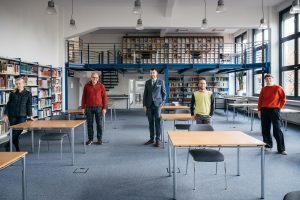
© Daniel Sadrowski
For the 2020/2021 edition, the focus will be on artists whose work deals in the broadest sense with 'climate' and 'sleep', the thematic brackets of the Ruhr Ding editions 2021 and 2022.
The residencies, which generally last three or twelve months, are initially awarded independently of specific project proposals and enable artists to familiarise themselves with the region, incorporate this experience into their existing work or develop new ideas from it.
For the first time in 2021, the Haus der Geschichte des Ruhrgebiets in Bochum and the Halfmannshof in Gelsenkirchen have opened their doors to artists who want to use the specific digital or content-related research opportunities for their work on site. Since the start of the programme, there have been collaborations with the KunstVereineRuhr, an association of various art associations and artists' houses in the region, as well as the Ringlokschuppen Ruhr and the Makroscope - Centre for Art and Technology in Mülheim an der Ruhr.
Artists
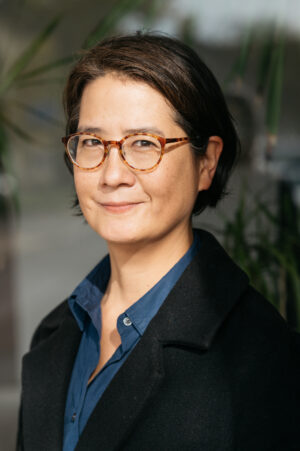
©Daniel Sadrowski
Yuki Jungesblut
Yuki Jungesblut seeks out potentialities and instances of overlap between imagination, fiction and reality, often exploring underdetermined states and liminality in general.
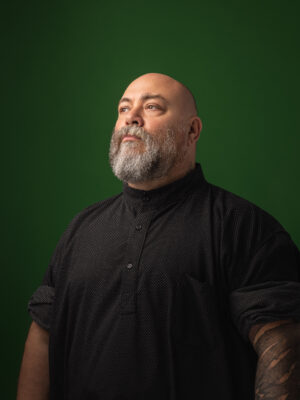
©Roland Baege
Viron Erol Vert
In his artistic practice, Viron Erol Vert probes – against the background of his own intercultural experiences – identity constructs and different aspects related to the self and the other.

©Roland Baege
Vanessa Nica Mueller
Vanessa Nica Mueller's films and artwork focus on aspects of memory, the relation of human, nature and urban space, the uncanny and the construction of conditions.

©Roland Baege
Thomas Taube
By means of multi-channel installations, associative, reflective and surreal sequences, Taube works against conventional cinematographic codes.
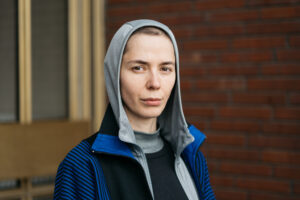
Nicoleta Moise
Nicoleta Moise is a visual artist, writer and researcher with different mediums combining photography, video and performance and focusses on making visible less known stories, characters or events.
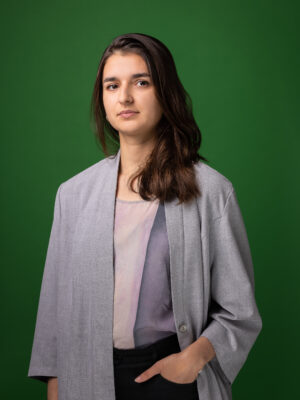
©Roland Baege
Nadine Rangosch
Natural sciences, visual culture and mythological stories inspire Nadine Rangosch to build her own vocabulary, translating abstract concepts into spatial arrangements.
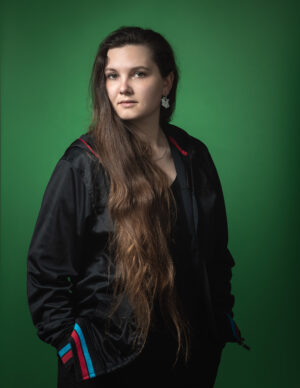
©Roland Baege
Laura Leppert
Laura Leppert works with film, installation and text. Her installations and cinematic spaces are constructed in fragments and are constantly in motion.
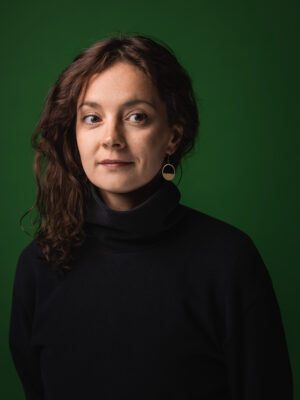
©Roland Baege
Kristina Paustian
Kristina Paustian examines cultural anthropological and socio-political topics. In cinematic images she focusses in particular on the themes of times of upheaval and technical utopias.

©Daniel Sadrowski
Julia Lübbecke
In her works, Julia Lübbecke deals with the relation between body and institution. She explores this connection to examine dominant structures of order and creates processes to make them fragile.
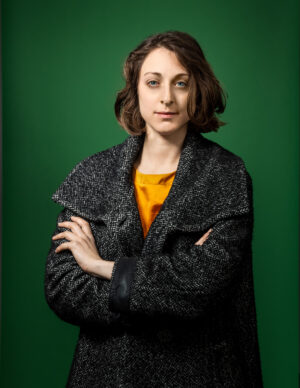
©Roland Baege
Jessica Arseneau
Jessica Arseneau explores the way human perception and subjectivity is shaped by social codes, patterns of behaviour, accelerating culture and technological progress.
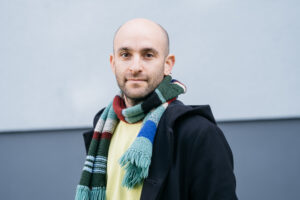
©Daniel Sadrowski
Guy Königstein
In his recent projects Guy Königstein researches the different ways we live the past in the present, for instance through practices of commemoration, archiving or archaeology.
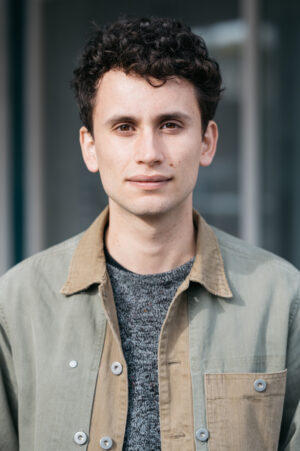
©Daniel Sadrowski
David Reiber Otálora
In his cinematic / sculptural works David Reiber Otálora deals with exoticisms and colonial representations of the so-called other and explores possibilities to affirm them into ambiguous narratives.
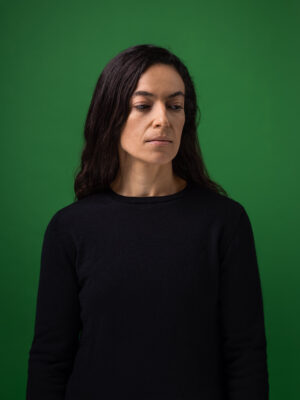
©Roland Baege
Adriana Arroyo
Adriana Arroyo's works reference to geological activity, to reveal possible relationships between the movement of the Earth, politics and the fragility of the body and the mind.