Breadcrumbs
Zu Gast Jahrgang 2026
© Daniel Sadrowski
Research Stay
1.9.-30.11.2026
Contact
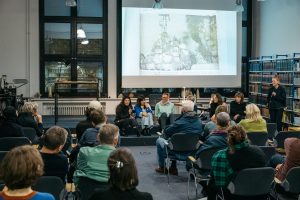
Urbane Künste Ruhr is awarding three research residencies at the House for the History of the Ruhr in Bochum.
Together with the History of the Ruhr Foundation (Stiftung Geschichte des Ruhrgebiets), we are awarding three three-month research residencies at the House for the History of the Ruhr (Haus der Geschichte des Ruhrgebiets) in Bochum for the year 2026. The programme is aimed at artists whose practice includes research and who are interested in developing a contemporary perspective on the Ruhr region and its themes. Through the affiliation with the foundation and a workspace at the House for the History of the Ruhr, including access to the library and archive, the residency enables an intensive engagement with the region.
During the research phase, residents are invited to develop a project idea in close exchange with the local curatorial team. Depending on its suitability, the project may become part of a curated public programme in Duisburg in 2027.
Questions of mobility and positioning within the art field, institutional critique, and context-specific artistic practices will be part of the event’s programme in Duisburg in 2027 and are explicitly welcome as points of departure. The residency is particularly suitable for artists working with text, language, film, or performance.
The History of the Ruhr Foundation
Founded in 1998, the foundation promotes research about the history and present of the Ruhr area and provides extensive publications and journals as well as numerous archives for this purpose. The foundation building houses the Library of the Ruhr and the archive, which are both available to artists. The archive also contains numerous documents on artistic projects and project plans in the context of the European Capital of Culture RUHR.2010 GmbH. In addition, there is a close connection to the Institute for Social Movements (Institut für Soziale Bewegungen) at the Ruhr University Bochum, from which the guest artists can also benefit.
Artists
© Jan Hottmann
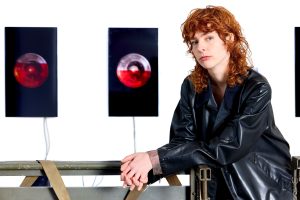
Julia Schäfer
Julia Schäfer is a Paris-based artist whose video works and site-specific installations explore narratives of loss by blurring documentary and fiction. Emerging from investigations into her family’s butchery, her work reflects on meat production as a metaphor for the dialectics of pleasure and pain, violence and sustenance.
© Jeanna Kolesova
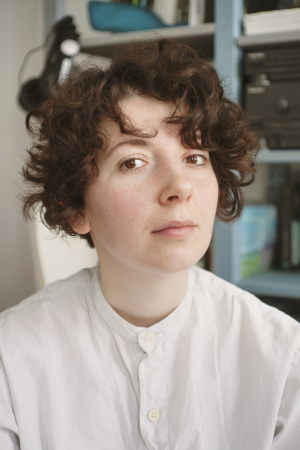
Jeanna Kolesova
Jeanna Kolesova is a Berlin-based artist, filmmaker, and researcher. Their practice traces how narratives emerge and circulate over time, examining their inscription into memories, infrastructures, and landscapes. Through speculative documentary, Kolesova reveals the cyclical relationship between narratives and histories of control, exploring how these cycles might be disrupted.
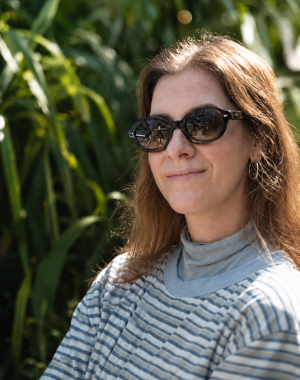
© Anael Berkovitz
Anael Berkovitz
Anael Berkovitz is an interdisciplinary artist, living and working between Brooklyn and Tel-Aviv. Berkoviz’s work draws on photography, film, installation and narration as means of examining the creation and perception of identity.