Jump to main content (press Enter)Jump to the footer (press Enter)

Breadcrumbs

  1. Home
  2. Publications
  3. Urbane Künste Ruhr 2018-2023
  4. Essay

Hollow space, Hologram, Holy Earth, Holzwickede, Home office
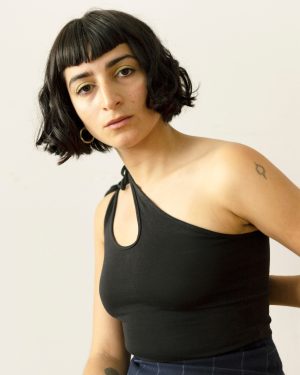
by June Drevet

©Heinrich Holtgreve

The Urbane Künste Ruhr magazines #1 to #9, created from 2018 to 2023, form the core of the book at hand. Inspired by the idea of summarising the years past, but also of portraying the processuality of an artistic programme playing out in public space, we decided to create a structural approach to navigating the already existing content – rather than conceiving a whole new publication.

At first glance, an index is an alphabetically ordered list of terms, which allows a narration to arise due to its sheer number and cluster of entries. The coexistence of seemingly foreign terms actually lends each individual word its narrative character: something emerges between the words – hollow space, hologram, Holy Earth, Holzwickede, home office – that spreads wings and takes on a life of its own in our imagination.

The creation of such an index gains in appeal if one has spent time following the system chosen with close and enduring interest. We decided to create the indexical structure according to the two fundamental aspects that strongly sustained the programme throughout all the years: sites and people. The pictorial plane shows Urbane Künste Ruhr colleagues since 2018 as well as smartphone pictures of numerous on-site encounters from the same period. After an initial analysis of all magazines, a list of 1,500 entries including people (and groups) was compiled.

Several site references were easy to define – countries, cities, continents, terms related to the cardinal directions. Others were not so obvious: facade, mesh, outside the box, quarantine? What makes a site a site? And how can language foster spatial dimensions? For this reason, the index in the end contains terms that are not sites per se, though they become sites when viewed through spectacles that make their spatial dimensions discernible. The word emotional world, for example: it is not a place where we can pull out a lawn chair and sit down, yet we can let somebody in, meaning that one can set foot in an emotional world, so to say.

All of the words listed reference magazine pages. The structure of the index thus serves to facilitate navigation back to the texts, mirroring the way Urbane Künste Ruhr leads people to familiar and unfamiliar sites, emphasising their special features by taking a unique perspective. For us, it was important to remain as close to the original as possible during the process of surveying the material: we treated all entries the same, whether specific (Haniel spoil tip or Hauptstraße 52) or more general (industrial parks or inside). If a site involved more than one element, for instance several factory buildings, then we used the term in plural form. If a preposition was necessary – as in outside the box for example – then we included it as well. Occasionally there were some unsuccessful potential entries. For example, it was a challenge to deal with terms that in German are considered places but lack a direct equivalent in English, or vice versa. An example of this is the German word Schutz, which has a spatial connotation in the magazine text referenced, yet the term had been originally translated as protection and thus required an additional translation in the index – shelter – so that it makes sense in the site index. 

When looking up words from the index, readers may notice that not all terms were translated in the same way. This is because we attach importance to retaining the nuances of the original texts, rather than adding new translations after the fact. As an example, in the English index the German word Rathausplatz (Town Hall Square) is listed, but also Herner Sea as a translation of Herner Meer. This also reflects the changes in editorial teams, and of translators and copyeditors in recent years. Moreover, the editors of the present volume decided on the simple solution of listing streets without adding the respective city behind the name of the street. Of course, the street Hauptstraße (Main Street) is found in more than one city, yet we have intentionally refrained from making direct references. Indeed, the readers are invited to leaf through the part of the book referenced in the index to discover for themselves which Hauptstraße is meant, or even to use the book to research the phenomenon of the Hauptstraße in Ruhr area cities on the whole.

The given orientation structure and our reflection on formal and editorial decisions, as touched upon here, are intended to illustrate how many different spaces we engage with in everyday life. In this sense, this index is not just a list of terms – it is an attempt to document and mediate Urbane Künste Ruhr’s countless physical and mental exploratory tours in book form. 

by June Drevet
Dortmund

Begleitet wird die Grand Snail Tour von Künstler*innen aus dem Bereich Literatur, Fotografie und Illustration, die zeitgleich zum Aufenthalt des Tourmobils, Eindrücke und Reflexionen aus jeweils derselben Stadt sammeln und diese sie visuell oder literarisch ins Bild setzen. So entsteht ein Paratext zur 3-jährigen Tour, der in Form einer Reisechronik, ein Kaleidoskop an Geschichten, Verbindungen, Momentaufnahmen in den 53 Städten der Region als Gleichzeitigkeiten und Ungleichzeitigkeiten zur Grand Snail Tour sichtbar werden lässt.

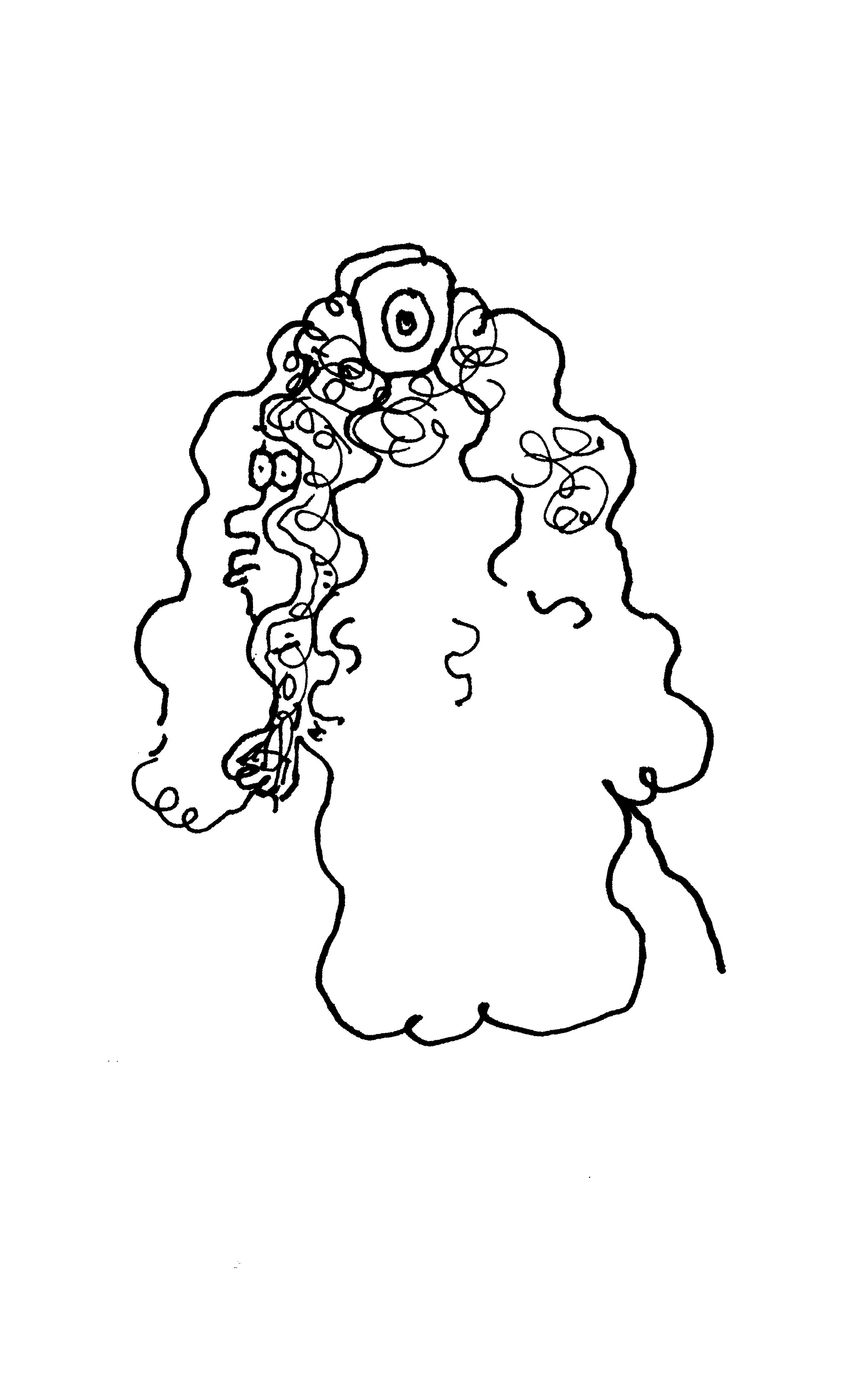
Dortmund von Stefan Marx

Dortmund von Tunay Önder

Dortmund, hier kenne ich mich aus, höre ich mich sagen. Aber eigentlich kenne ich nur die Nordstadt. Ich finde, damit ist das Wesentliche abgesteckt.  
Es ist spät, als ich ankomme. Mein Weg führt mich direkt in die Münsterstraße zum Malak Grill, ich brauche einen Schwarztee Außerdem gibt es hier köstliche Kibbeh.  

Zuletzt saß ich hier vor fünf Jahren damals mit Imad und Tuğba. Das Favoriten Festival wollte, dass wir Unruhe stiften, also gab es über mehrere Tage ein Happening im Dietrich-Keuning-Haus. Wir nannten es Maşallah Dortmund und riefen die Stadtgesellschaft zur Kanakisierung auf. Es war eine Oase inmitten der Strapazen in Almanya.  

Dortmund hat damals deutliche Spuren in mir hinterlassen. Im Gegenzug haben auch wir unsere Spuren in der Stadt hinterlassen, darunter ein riesengroßer, handgefertigter, runder Holztisch, der mittlerweile als Versammlungsort für die Dortmunder Pentagon-Gespräche dient – eine Wertschätzung der ganz besonderen Art, wie ich finde.  

Bei der Grand Snail Tour in Dortmund werde ich Zeugin, wie die Staffelübergabe eine besondere Wendung annimmt. Zum Großaufgebot der Urbanen Künste Ruhr auf dem Nordmarkt gehört auch ein Pentagon-Gespräch zum Thema Gastarbeiter*innen-Denkmal, das die Stadt gerade auf den Weg bringt – und mit dabei der sagenumwobene Tisch, der genau dort gelandet ist, wo er hingehört: unter die Menschen, in den öffentlichen Raum.  

Am Nordmarkt treffe ich auf bekannte und unbekannte Menschen, die mir allesamt familiär vorkommen, weiß nicht warum vielleicht weil wir ähnliche Erfahrungswelten, Lebenslagen und Struggles teilen. Sprachen überlagern sich, die ich nur zum Teil verstehe. Das tut gut. Hier kann ich entspannen, muss nicht alles verstehen und kann einfach sein.  

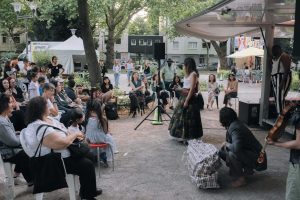
Für einige Tage überlagern sich mehrere magische Dreiecke an diesem Ort. Der Bühnenanhänger, die mobile Infobox, der Kiosk of Solidarity – und dazwischen fliegende Pralinenschachteln, Teezeremonien, KI-gesteuerte Skulpturen, Chorgesänge, DJ-Sets, Lesungen, Debatten, Tänze und Talks – und irgendwann formiert sich die Versammlung zu einer Art Hochzeitsgesellschaft. Ein Bild brennt sich besonders in mein Gehirn: Unzählige Kinder aus der Mahalle auf weißen Gartenstühlen applaudieren, tosen, lachen, schreien und beteiligen sich ungefragt an allen Performances. Eine Kollegin fragt mich, ob es eigentlich etwas Vergleichbares in München gibt.  

Manchmal muss man die Stadt, in der man lebt verlassen, um anzukommen. So geht es mir, wenn ich ins Ruhrgebiet fahre. Weg von zu Hause und viel eher daheim. Und immer wieder die Frage, wie die Nordstadt es schafft, trotz aller Repressionen eine pulsierende, postmigrantische Lebensrealität zu etablieren. Keine Kohle, aber Leben auf den Straßen. Ein paar Schritte weiter, um die Stadt, in der man lebt Plakate an mehreren Hofeingängen. „Kein Vergessen, kein Vergeben, Mouhamed Lamine Dramé“ / „Von der Polizei ermordet. Am 8.8.2022“ / „Wie viele noch?“  

Es war sicher auch kein Zufall, dass der Nationalsozialistische Untergrund genau hier wütete und Mehmet Kubaşık in seinem Kiosk in der Mallinckrodtstraße ermordete. Es tröstet mich zu sehen, dass der Mehmet-Kubaşık-Platz ein lebendiger Ort geworden ist, an dem Menschen gerne abhängen und Sonnenblumenkerne essen. Es weht ein widerspenstiger Wind an diesem Platz. 

Dortmund von Cihan Çakmak

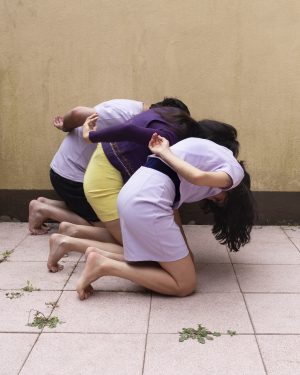
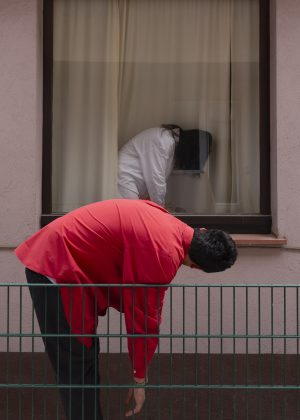
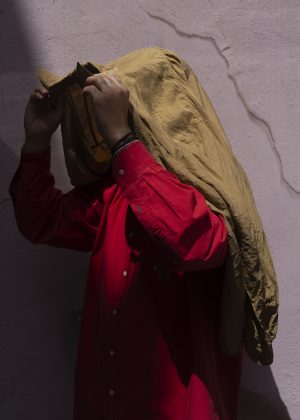
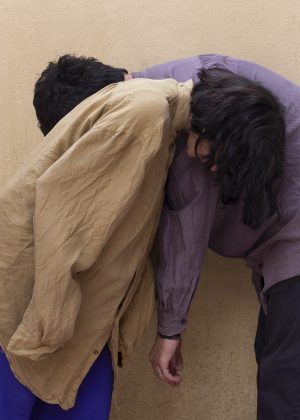
Die in Dortmund entstandenen Fotografien vereinen Menschen, im Selbstportrait, die entweder selbst oder in transgenerationaler Folge Krieg, Vertreibung und Identitäts-Blockaden erlitten haben. Die Posen der Protagonisten vereinen Trauer und Widerstand.

Stops

Open "Dortmund"
3.7.25, 15:30 – 5.7.25, 22 h

Appreciating in Dortmund

Dortmund

Artists

Open Artsit

Stefan Marx

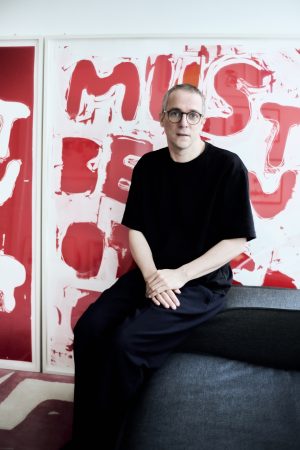
Stefan Marx is an artist and illustrator. He develops designs for various companies, creates the artwork for record covers and fanzines, but has also developed a design for the Königliche Porzellanmanufaktur. 

View
Open Artsit
xxx

©Anton Kaun

Tunay Önder

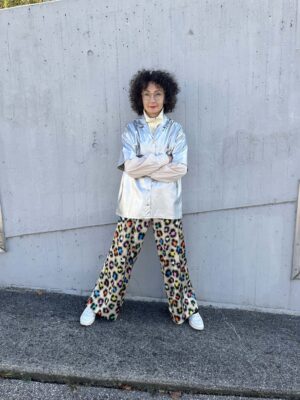
Tunay Önder works at the interface of text, performance, installation and discourse. She is particularly interested in emancipatory struggles in the context of the migration society. 

View
Open Artsit

Cihan Çakmak

Cihan Çakmak was born in Lower Saxony in 1993 and grew up in Worpswede and Bremen. After studying photography at the Dortmund University of Applied Sciences and Arts, with an interim study visit to Lisbon, she enrolled at the Leipzig Academy of Visual Arts in 2017. 

View