Jump to main content (press Enter)Jump to the footer (press Enter)

Breadcrumbs

  1. Home
  2. Artists
  3. Profile

Paula Erstmann

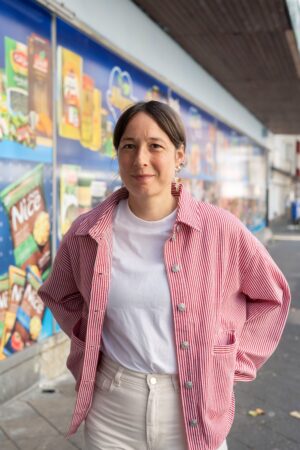
The artist Paula Erstmann works primarily with food as an artistic medium. Her performances, menus and food installations explore the social contexts of the food she uses and are artistic research projects that straddle the boundary between art and everyday life. The culinary work of the Berlin-based artist opens up both sensual and social spaces. With her work and the idea of communal dining, she aims to break down barriers and create space for dialogue. Paula Erstmann is a food poet and social activist. What stories does what we eat tell us? The crockery, the textiles, the table we dine at? What collective memories does food evoke in us? Since 2019, Paula Erstmann has been active in the Feuer & Flamme alliance, an initiative on the Dragonerareal Berlin with a communal kitchen, a collective oven and an open ceramics studio. She is a member of Urbane Praxis Berlin e.V. and is active in various locations in Berlin, where she initiates participatory formats with a wide variety of culinary interventions (including at the Floating University, S27 - Stadtwerk Mrzn, Mondiale, Zusammen Zimmern Festival, Blue:boks Kitas, Haus der Statistik, nGBK Hellersdorf, Lobby am Mehringplatz).
Worte an den Ohren, an der Haut, an der Zelle

Havîn Al-Sîndy

© Amina Falah

© Amina Falah

© Amina Falah

© Amina Falah

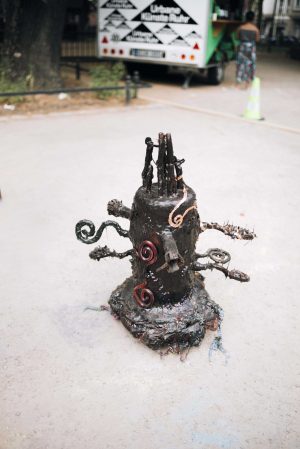
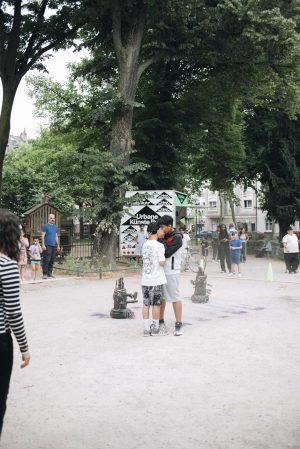
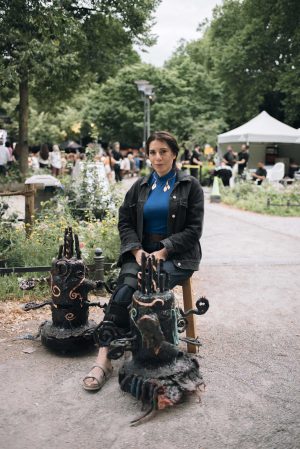
Auf dem Dortmunder Nordmarkt setzten sich zwei Skulpturen aus silikonartiger Textur und rätselhafter Silhouette das erste Mal in Bewegung – aufrecht, körperhaft und mit Mikrofonen versehen. Die über Sensoren gesteuerten Roboter haben mittels KI eines gelernt: das Lästern. Auch in Zukunft sollen Besucher*innen sich um sie versammeln, ihnen zuhören oder etwas zuflüstern können. So wird eine beiläufige, neugierige Öffentlichkeit allmählich in Gespräche verwickelt, die sie nicht vollständig kontrollieren kann. 

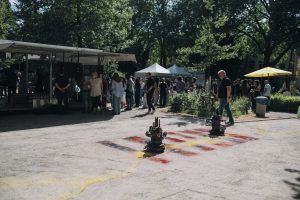
Die Roboter hat die Künstlerin Havîn Al-Sîndy in Kooperation mit Schüler*innen der Dortmunder Anne-Frank-Gesamtschule entwickelt. So ist Worte an den Ohren, an der Haut, an der Zelle Output eines Gestaltungsprozesses mit Jugendlichen, die ihre Stimmen, ihren Gossip, ihr Flüstern als Codes der Maschine geliehen haben. Zur Installation gehören auch eine sich durch Bewegung verändernde Bodenzeichnung und ein Film, der zwei aus Gips geformte Vögel in der Natur zeigt. 

Al-Sîndys Praxis kreist um immaterielle Archive – Erinnerungen, Körperwissen, kollektive Gedächtnisse – als fragile, widersprüchliche, doch wirkmächtige Formen von Wissen, und die Frage, wie sie weitergegeben, überschrieben oder verdrängt werden. Das Lästern ist dabei weit mehr als Klatsch: Es ist eine der ältesten Formen der informellen Sprachübertragung, eine des Widerstands für jene, denen offizielle Sprache verwehrt bleibt, eine Form der Oral History, die auf Marktplätzen und Hinterhöfen überlebt. Aber es ist auch ein Instrument der Mächtigen und der Manipulation: Sogar Amtsträger*innen verspotten heute öffentlich, das politische Gebaren scheint irrationaler zu werden. 

Die Frage, die Al-Sîndys Skulpturen stellen, ist also keine technische, sondern eine politische: Was geht verloren, wenn Sprache übersetzt, archiviert, codiert und automatisiert wird – und wessen Sprache war es überhaupt? 

Artist

Open Artsit

Havîn Al-Sîndy

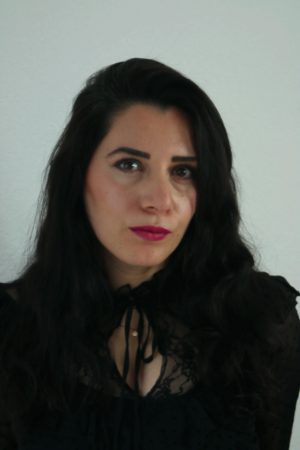
Havîn Al-Sîndy works in Kurdistan and Germany. Her artistic practice moves between performance, sculpture, painting, and moving images.  

View