Jump to main content (press Enter)Jump to the footer (press Enter)

Breadcrumbs

  1. Home
  2. Zu Gast
  3. Zu Gast

Zu Gast Jahrgang 2026

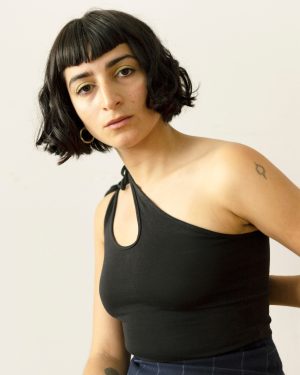
© Daniel Sadrowski

Application Deadline

27.3.2026

Research Stay

1.9.-30.11.2026

Urbane Künste Ruhr is awarding three research residencies at the House for the History of the Ruhr in Bochum.

Together with the History of the Ruhr Foundation (Stiftung Geschichte des Ruhrgebiets), we are awarding three three-month research residencies at the House for the History of the Ruhr (Haus der Geschichte des Ruhrgebiets) in Bochum for the year 2026. The programme is aimed at artists whose practice includes research and who are interested in developing a contemporary perspective on the Ruhr region and its themes. Through the affiliation with the foundation and a workspace at the House for the History of the Ruhr, including access to the library and archive, the residency enables an intensive engagement with the region.

During the research phase, residents are invited to develop a project idea in close exchange with the local curatorial team. Depending on its suitability, the project may become part of a curated public programme in Duisburg in 2027.

Questions of mobility and positioning within the art field, institutional critique, and context-specific artistic practices will be part of the event’s programme in Duisburg in 2027 and are explicitly welcome as points of departure. The residency is particularly suitable for artists working with text, language, film, or performance.

The History of the Ruhr Foundation

Founded in 1998, the foundation promotes research about the history and present of the Ruhr area and provides extensive publications and journals as well as numerous archives for this purpose. The foundation building houses the Library of the Ruhr and the archive, which are both available to artists. The archive also contains numerous documents on artistic projects and project plans in the context of the European Capital of Culture RUHR.2010 GmbH. In addition, there is a close connection to the Institute for Social Movements (Institut für Soziale Bewegungen) at the Ruhr University Bochum, from which the guest artists can also benefit. 

For whom?

The programme is aimed at professional artists whose practice is related to artistic research and who have a particular interest in working with archives. 

It is mandatory that the artists spend at least 75% of their time in the Ruhr area.

What does the Programme in Cooperation with the History of the Ruhr Foundation offer?

  • A research stay from 1.9. – 30.11.2026 with curatorial support and close exchange with the team of Urbane Künste Ruhr
  • Support with networking in the region
  • A guest artist's fee of € 5,000 gross
  • A workspace in the foundation's building
  • Costs for arrival and departure will be covered once
  • Accommodation in Bochum will be provided
  • Reimbursement of public transport travel costs for research purposes

Application Modalities for the Guest Artist Programme

We welcome applications from all people regardless of gender, nationality, ethnic and social origin, religious affiliation, disability, age, gender issues and identity. We offer our support in finding suitable solutions for individual needs, for example regarding accessibility.

Application Process: 

  • Application Deadline: 27.3.2026
  • Submission of application documents via online form
  • An expert jury will select the artistic positions
  • Applicants will be notified from late April 2026 onwards

Questions can be directed to
zugast@urbanekuensteruhr.de 
Alisha Raissa Danscher (Curator Urbane Künste Ruhr)
Jolande Hörrmann (Project Coordination)

Dortmund

Begleitet wird die Grand Snail Tour von Künstler*innen aus dem Bereich Literatur, Fotografie und Illustration, die zeitgleich zum Aufenthalt des Tourmobils, Eindrücke und Reflexionen aus jeweils derselben Stadt sammeln und diese sie visuell oder literarisch ins Bild setzen. So entsteht ein Paratext zur 3-jährigen Tour, der in Form einer Reisechronik, ein Kaleidoskop an Geschichten, Verbindungen, Momentaufnahmen in den 53 Städten der Region als Gleichzeitigkeiten und Ungleichzeitigkeiten zur Grand Snail Tour sichtbar werden lässt.

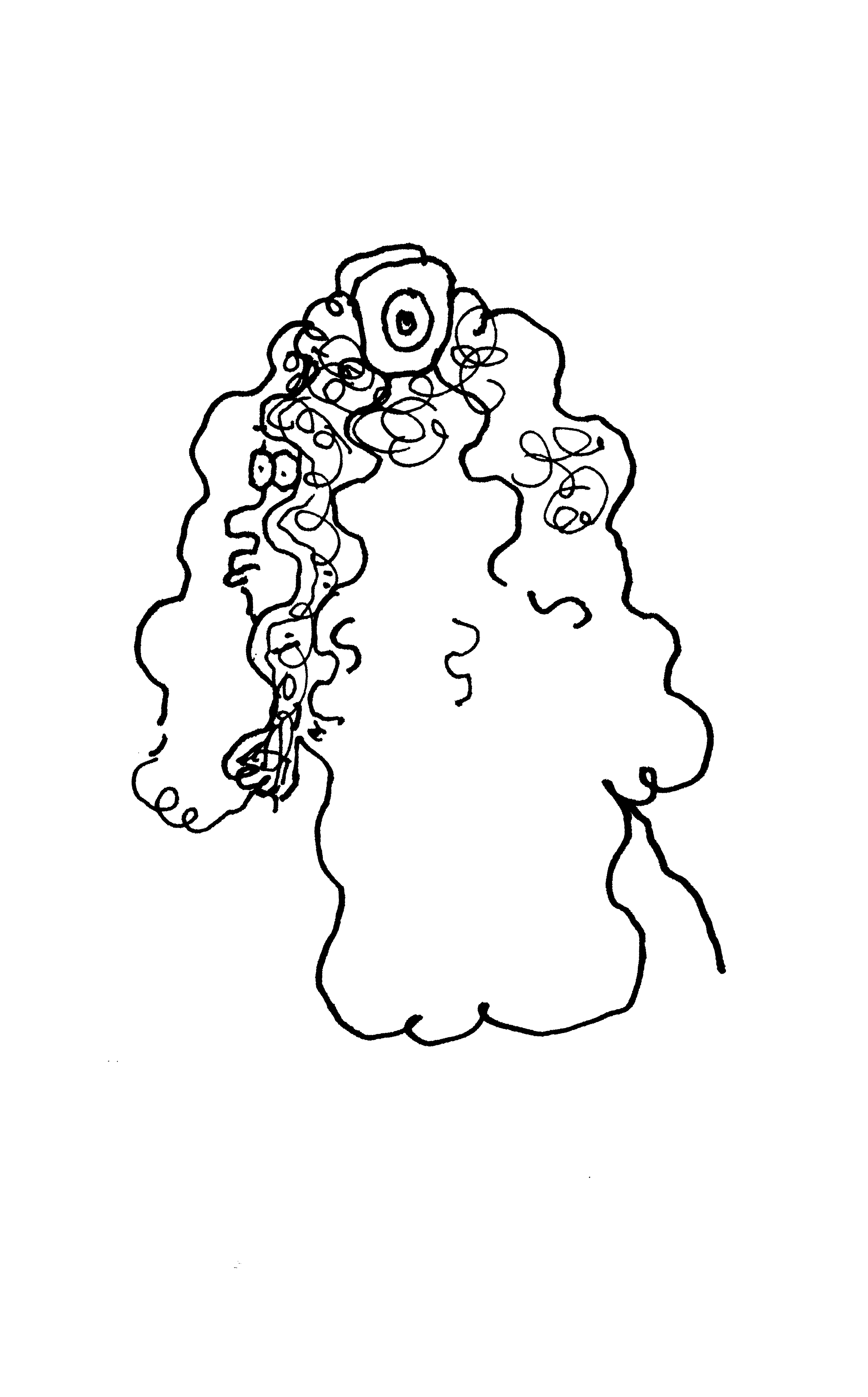
Dortmund von Stefan Marx

Dortmund von Tunay Önder

Dortmund, hier kenne ich mich aus, höre ich mich sagen. Aber eigentlich kenne ich nur die Nordstadt. Ich finde, damit ist das Wesentliche abgesteckt.  
Es ist spät, als ich ankomme. Mein Weg führt mich direkt in die Münsterstraße zum Malak Grill, ich brauche einen Schwarztee Außerdem gibt es hier köstliche Kibbeh.  

Zuletzt saß ich hier vor fünf Jahren damals mit Imad und Tuğba. Das Favoriten Festival wollte, dass wir Unruhe stiften, also gab es über mehrere Tage ein Happening im Dietrich-Keuning-Haus. Wir nannten es Maşallah Dortmund und riefen die Stadtgesellschaft zur Kanakisierung auf. Es war eine Oase inmitten der Strapazen in Almanya.  

Dortmund hat damals deutliche Spuren in mir hinterlassen. Im Gegenzug haben auch wir unsere Spuren in der Stadt hinterlassen, darunter ein riesengroßer, handgefertigter, runder Holztisch, der mittlerweile als Versammlungsort für die Dortmunder Pentagon-Gespräche dient – eine Wertschätzung der ganz besonderen Art, wie ich finde.  

Bei der Grand Snail Tour in Dortmund werde ich Zeugin, wie die Staffelübergabe eine besondere Wendung annimmt. Zum Großaufgebot der Urbanen Künste Ruhr auf dem Nordmarkt gehört auch ein Pentagon-Gespräch zum Thema Gastarbeiter*innen-Denkmal, das die Stadt gerade auf den Weg bringt – und mit dabei der sagenumwobene Tisch, der genau dort gelandet ist, wo er hingehört: unter die Menschen, in den öffentlichen Raum.  

Am Nordmarkt treffe ich auf bekannte und unbekannte Menschen, die mir allesamt familiär vorkommen, weiß nicht warum vielleicht weil wir ähnliche Erfahrungswelten, Lebenslagen und Struggles teilen. Sprachen überlagern sich, die ich nur zum Teil verstehe. Das tut gut. Hier kann ich entspannen, muss nicht alles verstehen und kann einfach sein.  

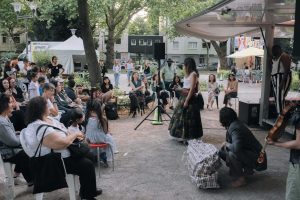
Für einige Tage überlagern sich mehrere magische Dreiecke an diesem Ort. Der Bühnenanhänger, die mobile Infobox, der Kiosk of Solidarity – und dazwischen fliegende Pralinenschachteln, Teezeremonien, KI-gesteuerte Skulpturen, Chorgesänge, DJ-Sets, Lesungen, Debatten, Tänze und Talks – und irgendwann formiert sich die Versammlung zu einer Art Hochzeitsgesellschaft. Ein Bild brennt sich besonders in mein Gehirn: Unzählige Kinder aus der Mahalle auf weißen Gartenstühlen applaudieren, tosen, lachen, schreien und beteiligen sich ungefragt an allen Performances. Eine Kollegin fragt mich, ob es eigentlich etwas Vergleichbares in München gibt.  

Manchmal muss man die Stadt, in der man lebt verlassen, um anzukommen. So geht es mir, wenn ich ins Ruhrgebiet fahre. Weg von zu Hause und viel eher daheim. Und immer wieder die Frage, wie die Nordstadt es schafft, trotz aller Repressionen eine pulsierende, postmigrantische Lebensrealität zu etablieren. Keine Kohle, aber Leben auf den Straßen. Ein paar Schritte weiter, um die Stadt, in der man lebt Plakate an mehreren Hofeingängen. „Kein Vergessen, kein Vergeben, Mouhamed Lamine Dramé“ / „Von der Polizei ermordet. Am 8.8.2022“ / „Wie viele noch?“  

Es war sicher auch kein Zufall, dass der Nationalsozialistische Untergrund genau hier wütete und Mehmet Kubaşık in seinem Kiosk in der Mallinckrodtstraße ermordete. Es tröstet mich zu sehen, dass der Mehmet-Kubaşık-Platz ein lebendiger Ort geworden ist, an dem Menschen gerne abhängen und Sonnenblumenkerne essen. Es weht ein widerspenstiger Wind an diesem Platz. 

Dortmund von Cihan Çakmak

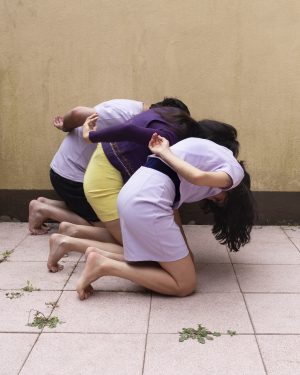
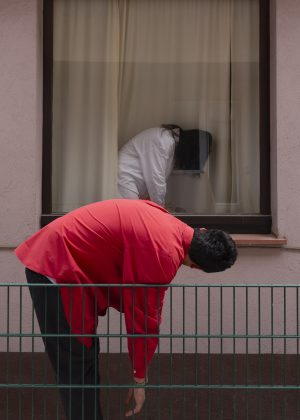
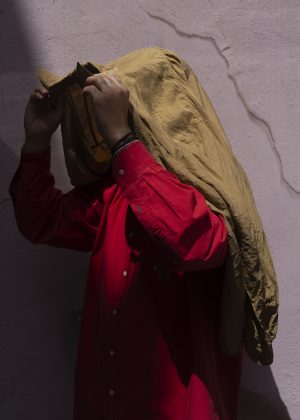
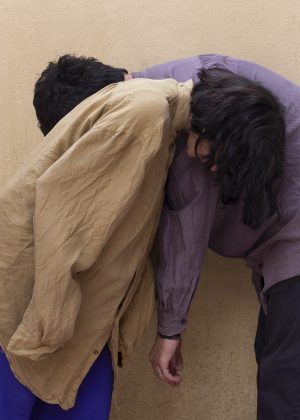
Die in Dortmund entstandenen Fotografien vereinen Menschen, im Selbstportrait, die entweder selbst oder in transgenerationaler Folge Krieg, Vertreibung und Identitäts-Blockaden erlitten haben. Die Posen der Protagonisten vereinen Trauer und Widerstand.

Stops

Open "Dortmund"
3.7.25, 15:30 – 5.7.25, 22 h

Appreciating in Dortmund

Dortmund

Artists

Open Artsit

Stefan Marx

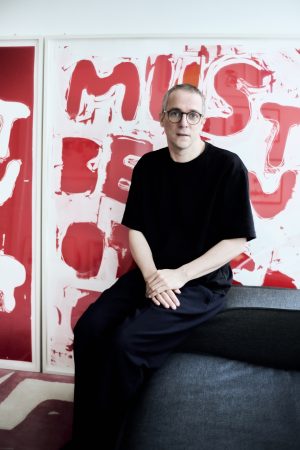
Stefan Marx is an artist and illustrator. He develops designs for various companies, creates the artwork for record covers and fanzines, but has also developed a design for the Königliche Porzellanmanufaktur. 

View
Open Artsit
xxx

©Anton Kaun

Tunay Önder

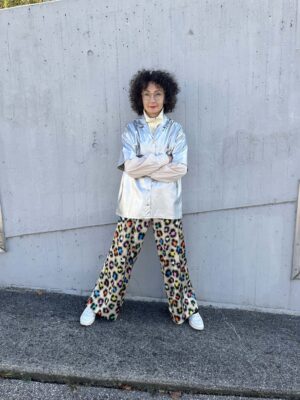
Tunay Önder works at the interface of text, performance, installation and discourse. She is particularly interested in emancipatory struggles in the context of the migration society. 

View
Open Artsit

Cihan Çakmak

Cihan Çakmak was born in Lower Saxony in 1993 and grew up in Worpswede and Bremen. After studying photography at the Dortmund University of Applied Sciences and Arts, with an interim study visit to Lisbon, she enrolled at the Leipzig Academy of Visual Arts in 2017. 

View