Breadcrumbs
Climate Grief and the Visible Horizonby Meehan Crist
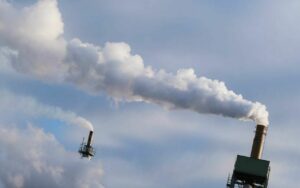
©Heinrich Holtgreve
(1) Ovid (2014). Metamorphoses. Translated by David Raeburn.
(2) Freud, S. (1917) Mourning and Melancholia.
The second book in the Metamorphoses by the Roman poet Ovid opens with a story that can be read as a climate metaphor. Phaëthon, the hot-headed son of Phoebus, the Sun God, is living on Earth with his mortal mother and feels the god has not acknowledged him as his rightful son. Hoping to prove his parentage, Phaëthon goes up into the sky and asks Phoebus for a sign that the god is indeed his father. “Ask me whatever favor you want,” says Phoebus, “and I’ll bestow it.” The boy responds: “I want to drive the chariot.” The request chills the Sun God to his core.
The chariot in question is the one Phoebus uses to take the sun across the sky each day. This golden chariot is drawn by a team of magnificent horses that only Phoebus can control. “Please ask me for anything else”, he says to his son, “Don’t ask me for something that can only end in your demise. You’re too young, not strong enough. Even the other gods cannot control this chariot.” But the boy is headstrong and hellbent on driving his father’s chariot. Phoebus relents. He hands Phaëthon the reins and off go boy and chariot into the sky. But as they race through the zodiac, the horses are spooked by the terrifying things in the celestial firmament – they bolt. The boy can’t control them. He is dragged out into the darkest outer reaches of space, then the horses reverse course and race back toward Earth, too close, and the flaming ball of the sun begins scorching the Earth’s surface. Phaëthon looks down and sees the world on fire.
The earth now burst into flames on all of
the hills and the mountains,
split into huge wide cracks, and dried as it lost
its moisture.
The corn turned white and the trees were
charred into
leafless skeletons;
Parched grain offered the perfect fuel for
self-ruination.
These losses were trifling. Destruction fell
upon great
walled cities;
mighty nations with all their peoples the
conflagration
turned into ashes […]
Phaëthon now looked down on a world in
flames […]
Wrapped in the pitchy darkness, he didn’t
know where he was going. (1)
The Earth, scorched and parched-lipped, calls out to Jupiter, “You have to do something. I’m dying.” The ‘king of the gods’ hears this plea and fires a thunderbolt at the chariot. Phaethon is instantly killed, and his corpse rains down from the heavens with his hair on fire like a comet. The terrified horses plunge into the ocean.
After his son’s death, Phoebus is unmoored by grief. He won’t drive the chariot, but the other gods implore him to take up the reins. “You have to,” they say. “We need the day.” Heart still heavy, he returns to the sky.
There is an obvious way to read this story as a metaphor for climate change. The planet is heating up. Ice is melting and fires are raging. Around the world, records are being set for the hottest temperatures in recorded history. (It’s almost a little too on-the-nose – just as in the story, the Arctic Circle is on fire.) In this reading, humanity is the boy: our hubristic desire to take control of what was never meant to be ours drives the world into chaos and destruction. Ted Hughes wrote a poem based on this story as just such a metaphor. But I think we can read it a little differently.
What if we, as readers, shift our identification from the boy to the people on Earth? Another way this story serves as an apt metaphor for climate change, one ignored by the more obvious interpretation, is that it includes marginalized, voiceless people who aren’t responsible for the destruction they’re living through. What was it like for the people in those burning cities and fields – how does it feel to witness that kind of destruction? What terrible fear would you feel? What horror and grief?
This question is not theoretical. People today are experiencing, in varied and unevenly distributed ways, what no generation of humans has ever faced: the ongoing loss of the planet as we have known it. This might mean the loss of your home to fire or flood, or the loss of a landscape that has defined your community. Do you rebuild a charred and smoldering home knowing there will be more fires? As your town sinks beneath the encroaching ocean, how much more than a home is lost? Climate change can mean the loss of a favorite childhood beach, or forest, or frozen swath of tundra, that feels like part of who you are and to which you can never return. When fisheries collapse because fish can no longer be found in the sea, this loss encompasses whole towns and industries based on those fish existing. It means loss of jobs, income, food security, and culture. We don’t have good language for talking about the kind of grief such loss entails. We don’t know how to process this grief in a way that enables us to move forward.
There are few grief paradigms that can perhaps help us to understand new forms of climate grief. In the classic essay Mourning and Melancholia (1917), Freud differentiates between two responses to loss. He describes mourning as a normal human reaction to loss, “the reaction to the loss of a loved person, or to the loss of some abstraction which has taken the place of one, such as one‘s country, liberty, an ideal, and so on”. Melancholia includes a prolonged period of mourning with all the same features, with an additional pathological skewing of self-regard – you begin to hate yourself a bit. “Profound mourning” writes Freud, “contains the same painful frame of mind, the same loss of interest in the outside world… the same loss of capacity to adopt any new object of love (which would mean replacing him).”2 In other words, you hang on to whatever was lost because letting it go to love something else becomes a rejection of the lost beloved. While mourning and melancholia are very similar processes, melancholia just won’t end – you remain transfixed, frozen in melancholia, unable to move on.
Another classic grief paradigm that offers insight is the “five stages of grief” outlined by psychiatrist Elisabeth Kübler-Ross. Her thinking aligns roughly with Freud’s concept of mourning, but breaks the process into stages: denial, anger, bargaining, depression and acceptance. I find it intriguing that in some visual representations of this process, depicted as a horizonal line with two hills, the second hill is labeled “acceptance” and appears higher than the first, implying that the successful mourner has ended up somewhere higher, and thus better, than before.
If Kübler-Ross’s model describes a process akin to Freud’s mourning, a third paradigm developed in the 90s known as “complicated grief ” describes a process more like melancholia. The symptoms of complicated grief are the same as those of “normal” grief – the defining element is the duration of the feelings. The mourner gets stuck in an early, acute stage of grief where the future seems bleak and empty. According to Dr. Katherine Shear at Columbia University, complicated grief occurs in only a small percentage of people who tend to have difficult relationships and a family or personal history of mental health disorders. The mourner is unable to process grief in the more “normal” sense of mourning, and they experience their negative symptoms as a way of remaining connected to what has been lost. You can hear echoes of Freud: grief is a form of love, so if you stop grieving, you’ve stopped loving – that in itself is painful.
While these grief paradigms are undoubtedly useful, all three stress finality. Someone has died. Something is gone. There’s been a concrete loss. It’s the job of the mourner to grieve appropriately and move on. This diminishes their usefulness in terms of understanding climate grief. They don’t map neatly onto climate grief because often we don’t know what the loss is, or will be. You don’t know if today’s flood zones will be tomorrow’s ocean. You can’t know how high or how fast the water will rise. The effects of climate change do not offer the sort of finality that can actually help us decide to let go, and move forward.
In the 1970s, when family therapist and psychologist Pauline Boss was working with people whose family members had gone missing in action, she came up with a new paradigm for grief that I think might be more apt: grief without closure, or “ambiguous loss”. Boss describes two types of ambiguous loss. In the first, the object of love is physically absent but remains psychologically present, as with those grieving a soldier missing in action. (Recently, a friend told me a story about a woman whose son went missing in action. Twenty years later someone in uniform came walking up to the house and she went racing out the front door thinking it might be him.) In the second type of ambiguous loss, the object of love is physically present but psychologically absent. Consider a loved one with Alzheimer’s. The person is still there – you can sit by them and hold their hand. You can still be in the same room, but in some sense the person is not really there. How do you grieve the loss of someone who’s sitting right in front of you? As Boss writes, “There is no closure. The challenge is to learn to live with the ambiguity.” Loss without closure seems closer to what some people are feeling in our warming world. But even ambiguous loss doesn’t map perfectly to climate grief, because with ambiguous loss the endpoint may still be known. With the Alzheimer’s patient, you know that in the end they’re going to die. With sea level rise, the end remains unknown, and unknowable.
We don’t have a paradigm for grief that requires us to embrace both ambiguity and finality. We don’t have a paradigm for grief that is both personal and global. The climate crisis presents us with multiple modes of grieving to try and fit into one coherent psychological space. Individually and collectively we’re stuck in a psychic gap which feels like chaos but also makes some sense. The question becomes, how do we decide what to let go of, what to fight for and what to mourn, so that we can move forward into a new sort of future?
by Meehan Crist