Jump to main content (press Enter)Jump to the footer (press Enter)

Breadcrumbs

  1. Home
  2. Exhibitions
  3. Ruhrtriennale

My Body Is Not
An Island

©Katja Illner
©Katja Illner
©Katja Illner

12.8. – 23.9.23

Address

Kulturkirche Liebfrauen Duisburg
König-Heinrich-Platz 3
47051 Duisburg

Accessibility

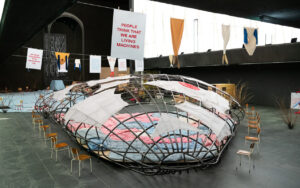
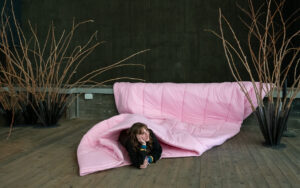
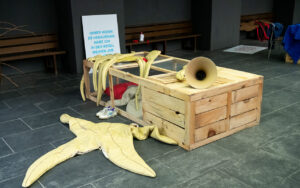
A giant, deconstructed body – part animal, part human – welded from a metal frame, with oversized items of clothing and brightly-coloured costumes that visitors may try on, transport crates and collages of material, unfolds to create an immersive landscape in the extensive installation My Body Is Not An Island by the Czech artist and film-maker Eva Koťátková.

Stories both factual and fictional telling of physical and mental oppression are written into the work. Tales from the perspectives of humans, animals and plants are activated every week by the performer and can be supplemented with the public’s own experiences. 

Originating from her own interest in social structures – such as the family, schools, or work – in this art work, Eva Koťátková explores the question of how normalisation processes shape our everyday lives and can give rise to forms of excessive (self-)control, violence and fear.

Influenced by the poetics of surrealism and theatrical stage designs, the artist has created an inclusive place in which we can face our dreams and our unconscious. My Body Is Not An Island invites children, young people and adults alike to empathise with others and to learn how to use emotions as a way in to the world: Bring your emotions and your jackets too, the artist tells us.

Urbane Künste Ruhr makes its own artistic contribution to each Ruhrtriennale. Following up on Ruhr Ding: Schlaf, an exhibition project across several cities early this summer that addressed our relationship with the body and time in a post-industrial context, it has invited Eva Koťátková to create a site-specific version of My Body Is Not An Island at Liebfrauenkirche Duisburg after the work had previously been seen in Bordeaux and Prague.

Produced by Urbane Künste Ruhr for Ruhrtriennale

Eva Koťátková and Britta Peters in Conversation

Please accept our Privacy Policy in order to display this Vimeo content.
Künstlerin Eva Koťátková und Britta Peters, Künstlerische Leitung von Urbane Künste Ruhr, führen euch bei einem Gespräch durch die Ausstellung „My Body Is Not An Island” in der Kulturkirche Liebfrauen in Duisburg.

©Katja Illner

Artist

Open Artsit

©National Gallery Krepmlová

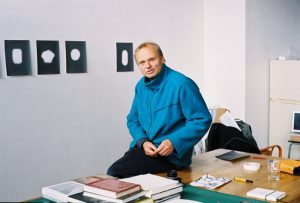
Eva Kot'átková

In her work, Eva Kot'átková explores forms of power, manipulation, discrimination and control exercised by institutions upon those who deviate from the norm (or what is perceived as such).
View

Bergkamen

Begleitet wird die Grand Snail Tour von Künstler*innen aus dem Bereich Literatur, Fotografie und Zeichnung, die zeitgleich zum Aufenthalt des Tourmobils, Eindrücke und Reflexionen aus jeweils derselben Stadt sammeln und diese sie visuell oder literarisch ins Bild setzen. So entsteht ein Paratext zur 3-jährigen Tour, der in Form einer Reisechronik, ein Kaleidoskop an Geschichten, Verbindungen, Momentaufnahmen in den 53 Städten der Region als Gleichzeitigkeiten und Ungleichzeitigkeiten zur Grand Snail Tour sichtbar werden lässt.

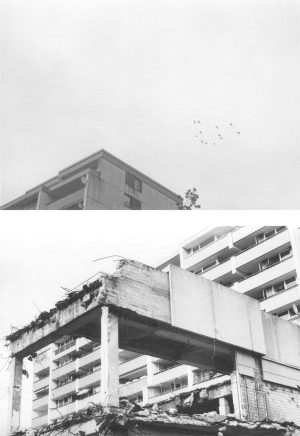
Bergkamen von Jochen Lempert

Bergkamen 7. August 2025

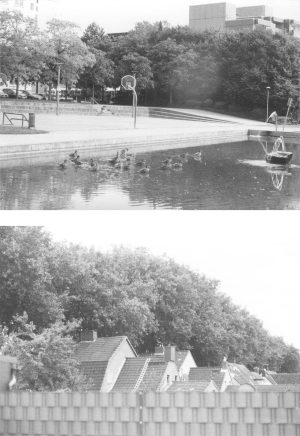
1a Bergarbeitersiedlung hinter zeitgenössischem Sichtschutz
1b Zeitliche Abgrenzung im Wasserpark: vormittags badende Stockenten — nachmittags Menschen mit Hunden

2a Eine kleine Population Stadttauben: Indikator für geringe menschliche Aktivität im öffentlichen Raum. Wenige Menschen bedeuten wenig Nahrung für Stadttauben.
2b Stadttauben waren einst Felsentauben — und schätzen felsige Strukturen als Brutplatz.

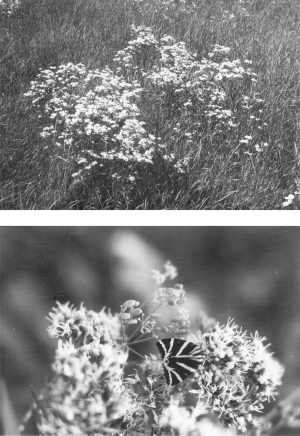
3a Feinstrahl —  nordamerikanischer Neophyt, der sich sich in den letzten Jahren stark verbreitet hat.
3b Russischer Bär — eine südliche Art an der Nordgrenze seines Areals — die in großer Zahl auf der Halde Großes Holz fliegt.

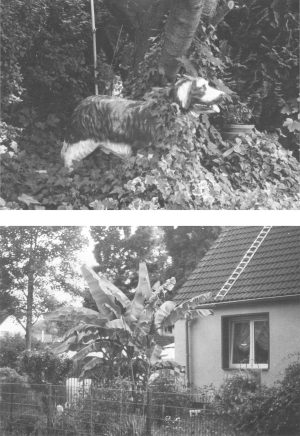
4a Wuchsformen des Efeus: ein Profiteur des CO2 Anstiegs
4b Bananenstaude: Zeichen eines Klimawandels

Stop

Open "Bergkamen"
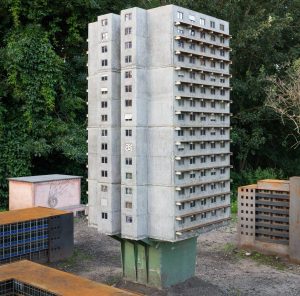
Model of the former residential tower in Bergkamen, part of the artwork “Neustadt” by Julius von Bismarck and Marta Dyachenko.

© Henning Rogge

7.8.25, 17–21 h

Narrating in Bergkamen

Bergkamen

Artist

Open Artsit

© Stiftung Sitterwerk

Jochen Lempert

Jochen Lempert (*1958) studied biology. Between 1979 and 1989, he was a member of the experimental film group Schmelzdahin, which explored the combination of chemical processes and celluloid film.

View