Jump to main content (press Enter)Jump to the footer (press Enter)

Breadcrumbs

  1. Home
  2. Zu Gast
  3. Zu Gast

Zu Gast
Jahrgang 2021

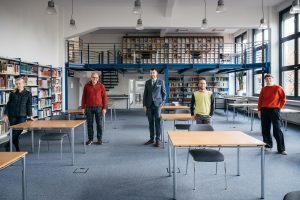
© Daniel Sadrowski

For the 2020/2021 edition, the focus will be on artists whose work deals in the broadest sense with 'climate' and 'sleep', the thematic brackets of the Ruhr Ding editions 2021 and 2022.

The residencies, which generally last three or twelve months, are initially awarded independently of specific project proposals and enable artists to familiarise themselves with the region, incorporate this experience into their existing work or develop new ideas from it.

For the first time in 2021, the Haus der Geschichte des Ruhrgebiets in Bochum and the Halfmannshof in Gelsenkirchen have opened their doors to artists who want to use the specific digital or content-related research opportunities for their work on site. Since the start of the programme, there have been collaborations with the KunstVereineRuhr, an association of various art associations and artists' houses in the region, as well as the Ringlokschuppen Ruhr and the Makroscope - Centre for Art and Technology in Mülheim an der Ruhr.

Artists
Open Artsit

©Daniel Sadrowski

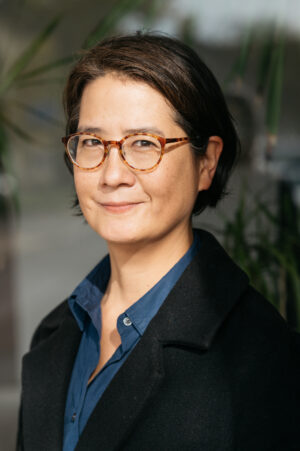
Yuki Jungesblut

Yuki Jungesblut seeks out potentialities and instances of overlap between imagination, fiction and reality, often exploring underdetermined states and liminality in general.
View
Open Artsit

©Roland Baege

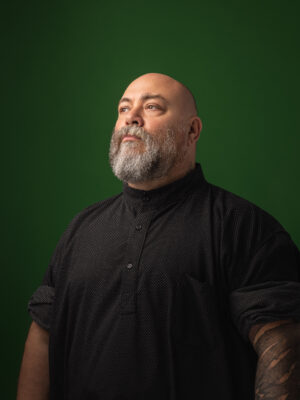
Viron Erol Vert

In his artistic practice, Viron Erol Vert probes – against the background of his own intercultural experiences – identity constructs and different aspects related to the self and the other.

View
Open Artsit

©Roland Baege

Vanessa Nica Mueller

Vanessa Nica Mueller's films and artwork focus on aspects of memory, the relation of human, nature and urban space, the uncanny and the construction of conditions.

View
Open Artsit

©Roland Baege

Thomas Taube

By means of multi-channel installations, associative, reflective and surreal sequences, Taube works against conventional cinematographic codes.
View
Open Artsit

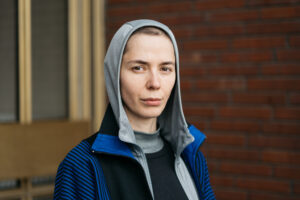
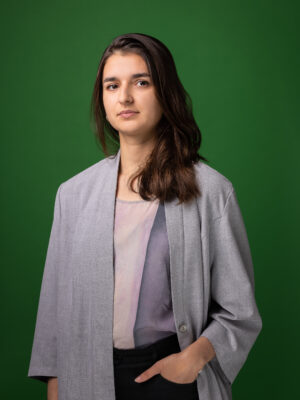
Nicoleta Moise

Nicoleta Moise is a visual artist, writer and researcher with different mediums combining photography, video and performance and focusses on making visible less known stories, characters or events.
View
Open Artsit

©Roland Baege

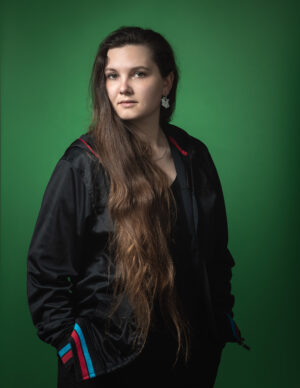
Nadine Rangosch

Natural sciences, visual culture and mythological stories inspire Nadine Rangosch to build her own vocabulary, translating abstract concepts into spatial arrangements.
View
Open Artsit

©Roland Baege

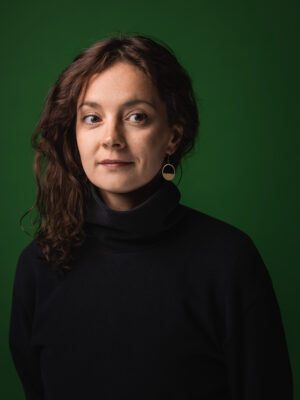
Laura Leppert

Laura Leppert works with film, installation and text. Her installations and cinematic spaces are constructed in fragments and are constantly in motion.
View
Open Artsit

©Roland Baege

Kristina Paustian

Kristina Paustian examines cultural anthropological and socio-political topics. In cinematic images she focusses in particular on the themes of times of upheaval and technical utopias.

View
Open Artsit

©Daniel Sadrowski

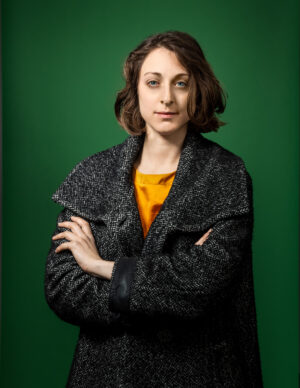
Julia Lübbecke

In her works, Julia Lübbecke deals with the relation between body and institution. She explores this connection to examine dominant structures of order and creates processes to make them fragile.
View
Open Artsit

©Roland Baege

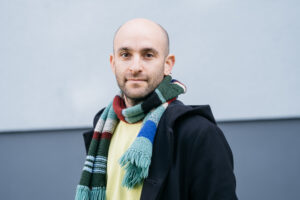
Jessica Arseneau

Jessica Arseneau explores the way human perception and subjectivity is shaped by social codes, patterns of behaviour, accelerating culture and technological progress.
View
Open Artsit

©Daniel Sadrowski 

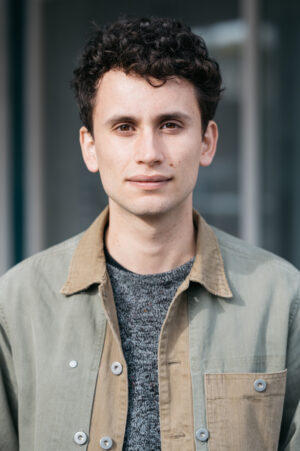
Guy Königstein

In his recent projects Guy Königstein researches the different ways we live the past in the present, for instance through practices of commemoration, archiving or archaeology.
View
Open Artsit

©Daniel Sadrowski

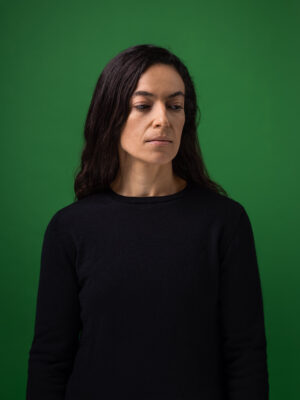
David Reiber Otálora

In his cinematic / sculptural works David Reiber Otálora deals with exoticisms and colonial representations of the so-called other and explores possibilities to affirm them into ambiguous narratives.
View
Open Artsit

©Roland Baege

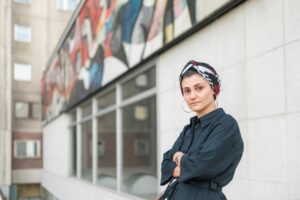
Adriana Arroyo

Adriana Arroyo's works reference to geological activity, to reveal possible relationships between the movement of the Earth, politics and the fragility of the body and the mind.
View

Haltern am See

The Grand Snail Tour will be accompanied by literary, photographic and illustrative artists, who will collect impressions and reflections from the same city at the same time as the Trailer is there and put them into visual or literary form. The result is a paratext on the three-year tour, a travel chronicle in the form of a kaleidoscope of stories, connections and snapshots in the 53 cities of the region, revealing the simultaneities and non-simultaneities of the Grand Snail Tour.

Haltern am See von Luna Ali

Haltestelle fast verpasst, ich greife nach all meinen Sachen, die Bahn hielt schon an, ich stieg aus, laufe zur Bank, setze alles ab. Angekommen, alles in der Tasche verstaut. Es geht los. Ich atme die Luft ein, vielleicht riecht sie hier anders, ich stelle keinen Unterschied fest.

An einem Unterstand hängt das Gemälde eines Mannes. Er blickt ernst, grün trägt er. Sein Vorname ist übermalt, aber unter dem Weiß lese ich noch Torquato, noch sichtbar der Nachname: Tasso. Ich denke an Goethe, aber weiß nicht weiter als ein Poet, der in den Wahnsinn wandert. 

Lebenstein lese ich auf dem Weg an einem ehemaligen jüdischen Friedhof vorbei, die Namen im Stein der Gräber ausgeschlagen. Lebenstein, der einzige Überlebende Jude aus Haltern am See. Lebenstein schreibt, dass er vor seiner ersten Reise nach Deutschland noch voller Hass und Wut war, 1938 aus seinem Haus vertrieben worden zu sein. Lebenstein sagte, der Weltfriede läge in den Händen derjeniger, die es sich wünschen. Was muss also geschehen, um von Wut und Hass zu Weltfrieden und Versöhnung zu kommen? Ich schreibe und denke an Syrien.

Trotzdem weiter bis zum See, an einem anderen Friedhof vorbei. Hier liegen ganze Familien, die Gräber tragen ihre Namen. 

Entlang am See, die Baume tragen auch Namen. Entlang am See ein Zaun, im See Trinkwasser. Ich setze mich auf eine Bank, am Zaun, hier steht: „Das, was ich fühle, passt nicht in deinen kapitalistischen Kopf“. Ich esse meine Walnuss-Ahorn-Schnecke.

Regen gibt es heute nicht, die Sonne scheint. Ich ziehe meine Jacke aus, es ist zu warm. Weiter geht es, ich laufe in die andere Richtung. Der Aushang informiert, dass die Fähre am 13. April 2024 ausfällt.

Nari nareen, albi min gamaloo, schallt es aus einem weißen Transporter, ein Klassiker aus dem Jahr 2000. Der Paketboote von Hermes, ich sehe ihn nun zum zweiten Mal. Das erste Mal an einer Ampel, mit einem anderen Lied. Das zweite Mal hält er an, steigt aus, holt ein Paket von hinten, verschwindet zwischen den Häusern, kehrt zurück, steigt ein, fährt davon, beliefert die Stadt.

Ankommen ist einfach in Haltern am See, merke ich ein paar Stunden später. Es ist lebendig hier, am Brunnen vor der Kirche spielen Kinder. Alles nicht ruhig, laut, Geschrei, Gelächter, vielleicht liegt es am Wetter, vielleicht aber auch an dem Gefühl „Shoppen, wo andere Urlaub machen“, wie es in einem Schaufenster hängt. Der See ist ja nur teilweise umzäunt, erfahre ich. Man schwimmt hier im Trinkwasser. 

Manchmal ist es nicht so einfach ins Blaue hineinzuschreiben, da muss das Gefühl schon sehr stark sein. Einfacher ist es, einen Textauftrag zu geben. Ich beauftrage das Büro für außerordentliche Schreibangelegenheiten mir eine Chronik für meinen Aufenthalt in Haltern am See zu schreiben. Insgesamt erhalten sie 38 Aufträge, von denen Caren Jeß und Tim Holland uns sechs vorlesen. Haltern am See vergibt vor allem Aufträge für Liebesbriefe, aber ein Wohnungsgesuch und eine Kündigung gibt es auch. Mir bleibt FF im Kopf.

Skulpturen im öffentlichen Raum, meine Sammlung: Drei Gänse und ein Mädchen mit einem Stock in der Hand. Der gescheiterte Varus, schaut ungläubig. Zwei Männer im Sprung. Eine Kuh am Wegesrand. Zwei Frauen und ein Hund am Marktbrunnen. Unschlüssig bin ich darüber, was es mit den Skulpturen auf sich hat, was sie in ihrer Summe bedeuten, ein Bruchteil habe ich nur gesehen. Ist es die Erzählung der Stadt? Die Aneignung des öffentlichen Raumes aus den Fängen der Bauverordnung? Ist eine Skulptur nicht selbst eine Art Blackbox eines komplizierten Verwaltungsprozesses? 

Extrablatt, Feierabend. 

Einen letzten Absatz will ich noch schreiben: Der Name der Stadt bietet Späße wie „Zusammenhalte(r)n für Demokratie!“ Dass es in Tagen wie diesen leider nicht nur ein Wortspiel ist, sondern dringende Pflicht, ist die bittere Realität in einer pluralen Gesellschaft. Der Angriff auf elementare Grundrechte wurde schon vor den Koalitionsverhandlungen durch „die kleine Anfrage“ der CDU deutlich. Nun wissen wir, dass es bei „kleinen Anfragen“ nicht bleiben wird. Vom Entzug von Staatsbürgerschaften ist die Rede und damit, wie Hannah Arendt einst festgestellt hat, vom Recht, Rechte zu haben. Was wir erleben, ist keine Wiederholung, sondern eine Kontinuität.

Artist

Open Artsit

©Paul Lovis Wagner

Luna Ali

Luna Ali, born in Syria in 1993, has worked as an author on productions at the Düsseldorf, Dortmund and Hanover theaters as well as in Berlin.

View