Jump to main content (press Enter)Jump to the footer (press Enter)

Breadcrumbs

  1. Home
  2. Exhibitions
  3. Exhibition

Die Spielstraße
nchen 1972

23.8. – 1.11.20

In 1972, Werner Ruhnau was invited by the Olympic Organizing Committee to realize the Spielstraße as a supporting program for the Olympic Games in Munich. 

In accordance with the principles of the modern Olympic Games, which were intended to contribute to international understanding and tolerance among nations, the project invited people of all backgrounds to come together at the Spielstraße and enter into communication with one another. The contributions on site included various artistic media, from performing games and video works to objects and performances from the field of visual arts. The focus was on the critical examination of current events from the stadiums, the possibility of participation, and the timeless Olympic ideals. Due to the attack on the Israeli team on September 5th, 1972, the Spielstraße was demolished early on and was hardly received in the aftermath.

The architect Werner Ruhnau lived in Essen until the end of his life and became famous above all for his innovative theater buildings such as the Musiktheater im Revier in Gelsenkirchen. Anita Ruhnau took over the project management of the visual arts division during the realization of the Spielstraße. The exhibition at the Skulpturenmuseum Glaskasten in Marl, curated by Georg Elben, Britta Peters and Jana Kerima Stolzer, approaches the Spielstrasse from a contemporary perspective and for the first time shows film material from the archives of Werner and Anita Ruhnau, as well as original objects by the participating visual artists. In doing so, it approaches the historical events and project plans and invites visitors to reflect on the relevance of the social climate for (urban) society.
Bergkamen

Begleitet wird die Grand Snail Tour von Künstler*innen aus dem Bereich Literatur, Fotografie und Zeichnung, die zeitgleich zum Aufenthalt des Tourmobils, Eindrücke und Reflexionen aus jeweils derselben Stadt sammeln und diese sie visuell oder literarisch ins Bild setzen. So entsteht ein Paratext zur 3-jährigen Tour, der in Form einer Reisechronik, ein Kaleidoskop an Geschichten, Verbindungen, Momentaufnahmen in den 53 Städten der Region als Gleichzeitigkeiten und Ungleichzeitigkeiten zur Grand Snail Tour sichtbar werden lässt.

Bergkamen von Jochen Lempert

Bergkamen 7. August 2025

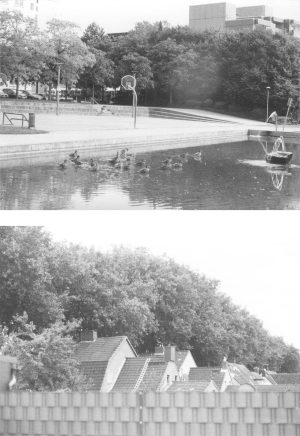
1a Bergarbeitersiedlung hinter zeitgenössischem Sichtschutz
1b Zeitliche Abgrenzung im Wasserpark: vormittags badende Stockenten — nachmittags Menschen mit Hunden

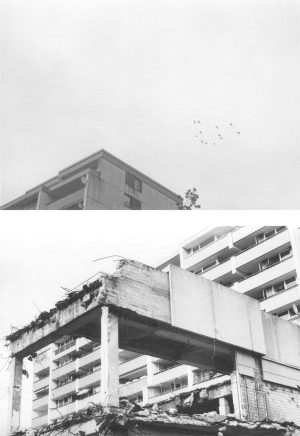
2a Eine kleine Population Stadttauben: Indikator für geringe menschliche Aktivität im öffentlichen Raum. Wenige Menschen bedeuten wenig Nahrung für Stadttauben.
2b Stadttauben waren einst Felsentauben — und schätzen felsige Strukturen als Brutplatz.

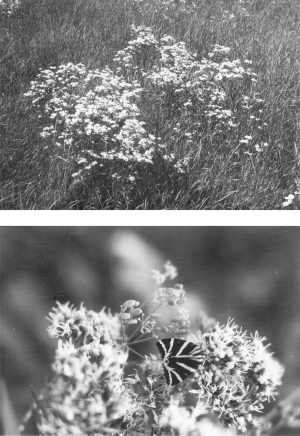
3a Feinstrahl —  nordamerikanischer Neophyt, der sich sich in den letzten Jahren stark verbreitet hat.
3b Russischer Bär — eine südliche Art an der Nordgrenze seines Areals — die in großer Zahl auf der Halde Großes Holz fliegt.

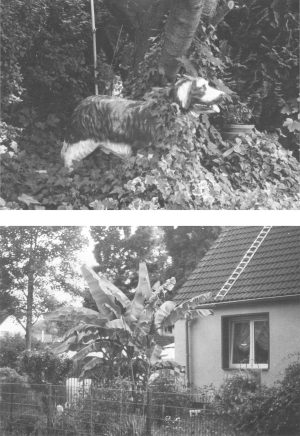
4a Wuchsformen des Efeus: ein Profiteur des CO2 Anstiegs
4b Bananenstaude: Zeichen eines Klimawandels

Stop

Open "Bergkamen"
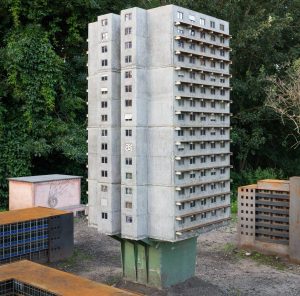
Model of the former residential tower in Bergkamen, part of the artwork “Neustadt” by Julius von Bismarck and Marta Dyachenko.

© Henning Rogge

7.8.25, 17–21 h

Narrating in Bergkamen

Bergkamen

Artist

Open Artsit

© Stiftung Sitterwerk

Jochen Lempert

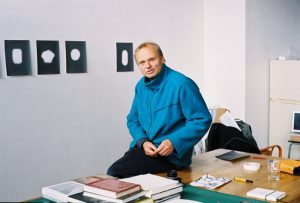
Jochen Lempert (*1958) studied biology. Between 1979 and 1989, he was a member of the experimental film group Schmelzdahin, which explored the combination of chemical processes and celluloid film.

View