Jump to main content (press Enter)Jump to the footer (press Enter)

Breadcrumbs

  1. Home
  2. Exhibitions
  3. Ruhrtriennale

Absorption

© Heinrich Holtgreve

14.8. – 25.9.21

Address

ehemaliges Allbauhaus
Pferdemarkt 5-7
45127 Essen

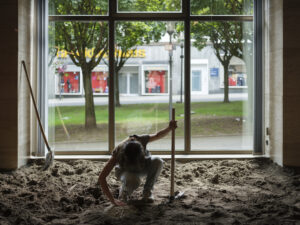
Earth, the underestimated material from which our world grows, penetrates into the furthest corners of a historic building in Essen's city centre. With Absorption, Urbane Künste Ruhr is showing an installation by US artist Asad Raza of great sensual and poetic power, which takes up the entire ground floor of the listed former Allbau building on Pferdemarkt.

Earth is created as a mixture of sand, clay and compost. Organic and inorganic matter is added to this base in the run-up to and during the exhibition, which is processed and composted to create new earth - called ‘Neosoil’ by Raza. A team of ‘cultivators’ will also be on site throughout the duration of the exhibition, constantly filtering, breaking down, analysing and remixing the soil under scientific supervision. The components collected in the region, such as sewage sludge, waste paper or hair, enrich the soil, which is given away as fertile soil to visitors, allotment associations and social organisations during the exhibition period.

At the invitation of Asad Raza, artists Maria Renee Morales Garcia and Agatha Gothe-Snape will add sculptural and performative moments of tension to the process alongside the sound work Ten Years Alive on the Infinite Plain by Tony Conrad. Earlier versions of Absorption were shown at the Kaldor Public Art Project (Sydney, 2019) and the Gropius Bau (Berlin, 2020).

Artist
Open Artsit
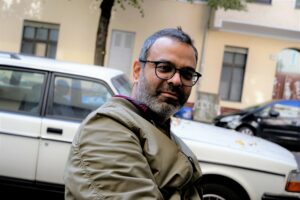
Portrait of artist Asad Raza, who creates interdisciplinary works between art, science, and philosophy, wearing glasses and an olive-green jacket in an urban setting.

© Daniel Sadrowski

Asad Raza

In his work artist Asad Raza often explores dialogic exchange and rejects disciplinary boundaries. Raza conceives of art as a metabolic, active experience combining human, non-human beings.
View

Bergkamen

Begleitet wird die Grand Snail Tour von Künstler*innen aus dem Bereich Literatur, Fotografie und Zeichnung, die zeitgleich zum Aufenthalt des Tourmobils, Eindrücke und Reflexionen aus jeweils derselben Stadt sammeln und diese sie visuell oder literarisch ins Bild setzen. So entsteht ein Paratext zur 3-jährigen Tour, der in Form einer Reisechronik, ein Kaleidoskop an Geschichten, Verbindungen, Momentaufnahmen in den 53 Städten der Region als Gleichzeitigkeiten und Ungleichzeitigkeiten zur Grand Snail Tour sichtbar werden lässt.

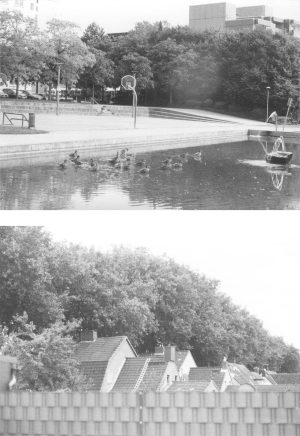
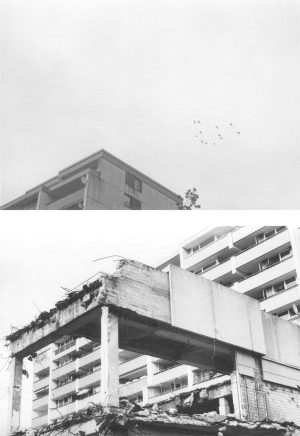
Bergkamen von Jochen Lempert

Bergkamen 7. August 2025

1a Bergarbeitersiedlung hinter zeitgenössischem Sichtschutz
1b Zeitliche Abgrenzung im Wasserpark: vormittags badende Stockenten — nachmittags Menschen mit Hunden

2a Eine kleine Population Stadttauben: Indikator für geringe menschliche Aktivität im öffentlichen Raum. Wenige Menschen bedeuten wenig Nahrung für Stadttauben.
2b Stadttauben waren einst Felsentauben — und schätzen felsige Strukturen als Brutplatz.

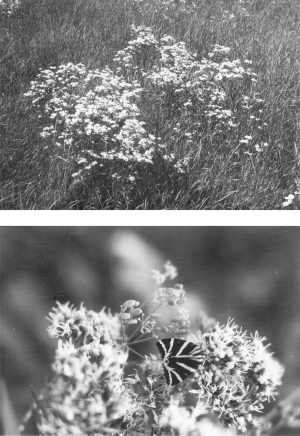
3a Feinstrahl —  nordamerikanischer Neophyt, der sich sich in den letzten Jahren stark verbreitet hat.
3b Russischer Bär — eine südliche Art an der Nordgrenze seines Areals — die in großer Zahl auf der Halde Großes Holz fliegt.

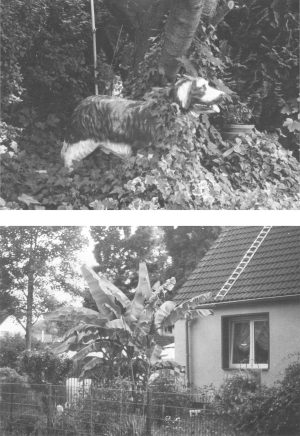
4a Wuchsformen des Efeus: ein Profiteur des CO2 Anstiegs
4b Bananenstaude: Zeichen eines Klimawandels

Stop

Open "Bergkamen"
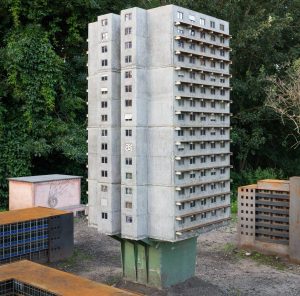
Model of the former residential tower in Bergkamen, part of the artwork “Neustadt” by Julius von Bismarck and Marta Dyachenko.

© Henning Rogge

7.8.25, 17–21 h

Narrating in Bergkamen

Bergkamen

Artist

Open Artsit

© Stiftung Sitterwerk

Jochen Lempert

Jochen Lempert (*1958) studied biology. Between 1979 and 1989, he was a member of the experimental film group Schmelzdahin, which explored the combination of chemical processes and celluloid film.

View