Jump to main content (press Enter)Jump to the footer (press Enter)

Breadcrumbs

  1. Home
  2. Emscherkunstweg
  3. Königsgrube

Königsgrube

© Henning Rogge

© Henning Rogge

© Henning Rogge

Address

Hofstraße 24
44651 Herne

Open in Maps

A former pumping station of a disused colliery becomes an installation, the name remains and sounds promising: Königsgrube. Markus Jeschaunig's work, in which he transforms fragments of the demolished building into a hybrid landscape, is characterised by past and future.

From 1860 to 1967, coal mining at the Königsgrube colliery in Herne-Röhlinghausen was extremely productive, then the black gold was extracted, leaving the earth depleted and perforated with subsidence of up to ten metres. The pumping station had the task of channeling the waste water from the neighbouring communities into the Hüller Bach and from there into the Emscher. With the end of coal mining, underground disposal became possible and the pumping station was decommissioned.

The pumping station is now being demolished. Artist Markus Jeschaunig is creating an installation on the partially backfilled foundations that sculpturally integrates various elements of the building: Part of a staircase will be preserved, three pipes will form a solar-powered fountain from which drops of water and sounds can be heard. A quarry forest is being created, a biotope made up of six black alder trees that like it wet and are reminiscent of the floodplain landscapes along the Emscher in pre-industrial times. On the paved forecourt, rainwater can be collected in a cistern via gutters and, together with a photovoltaic pergola, enables completely self-sufficient operation.

As an artistically remodelled ruin, Jeschaunig's work points to both the great technologies and the enormous ecological destruction that mining brought with it, and at the same time shows a way in which new life and climate-positive places can be created in the city.

Artist

Open Artsit

©Daniel Sadrowski

Markus Jeschaunig

Markus Jeschaunig works as an artist and architect, his projects combine art, natural sciences, ecology and activism.

View

Dates

  • Open Event
    Group of cyclists on a tour along the Emscherkunstweg. The cyclists ride on a paved path next to a river, passing under a highway bridge, surrounded by green scenery.

    © Daniel Sadrowski

    So., 30.3.25, 12:30–15 hView

    Bike Tour to the Opening of Königsgrube

  • Open Event
    The former pumping station Königsgrube by Markus Jeschaunig is captured in a winter setting, highlighting its green industrial structures and historical significance.

    © Daniel Sadrowski

    So., 30.3.25, 15 hView

    Opening Königsgrube

Bergkamen

Begleitet wird die Grand Snail Tour von Künstler*innen aus dem Bereich Literatur, Fotografie und Zeichnung, die zeitgleich zum Aufenthalt des Tourmobils, Eindrücke und Reflexionen aus jeweils derselben Stadt sammeln und diese sie visuell oder literarisch ins Bild setzen. So entsteht ein Paratext zur 3-jährigen Tour, der in Form einer Reisechronik, ein Kaleidoskop an Geschichten, Verbindungen, Momentaufnahmen in den 53 Städten der Region als Gleichzeitigkeiten und Ungleichzeitigkeiten zur Grand Snail Tour sichtbar werden lässt.

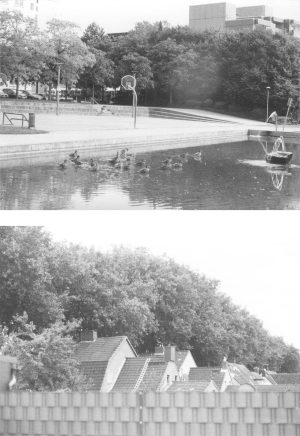
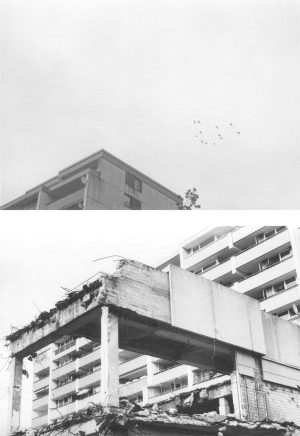
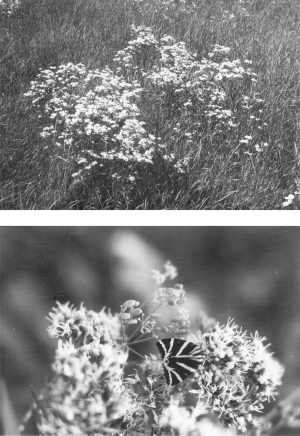
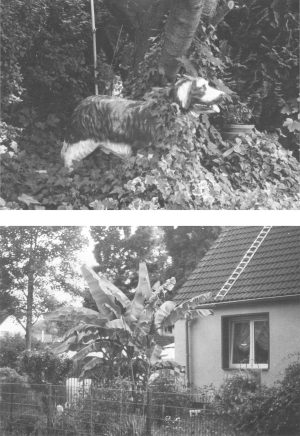
Bergkamen von Jochen Lempert

Bergkamen 7. August 2025

1a Bergarbeitersiedlung hinter zeitgenössischem Sichtschutz
1b Zeitliche Abgrenzung im Wasserpark: vormittags badende Stockenten — nachmittags Menschen mit Hunden

2a Eine kleine Population Stadttauben: Indikator für geringe menschliche Aktivität im öffentlichen Raum. Wenige Menschen bedeuten wenig Nahrung für Stadttauben.
2b Stadttauben waren einst Felsentauben — und schätzen felsige Strukturen als Brutplatz.

3a Feinstrahl —  nordamerikanischer Neophyt, der sich sich in den letzten Jahren stark verbreitet hat.
3b Russischer Bär — eine südliche Art an der Nordgrenze seines Areals — die in großer Zahl auf der Halde Großes Holz fliegt.

4a Wuchsformen des Efeus: ein Profiteur des CO2 Anstiegs
4b Bananenstaude: Zeichen eines Klimawandels

Stops

Open "Bergkamen"
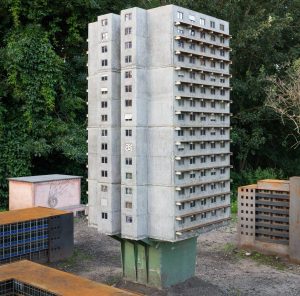
Model of the former residential tower in Bergkamen, part of the artwork “Neustadt” by Julius von Bismarck and Marta Dyachenko.

© Henning Rogge

7.8.25, 17–21 h

Narrating in Bergkamen

Bergkamen

Artist

Open Artsit

© Stiftung Sitterwerk

Jochen Lempert

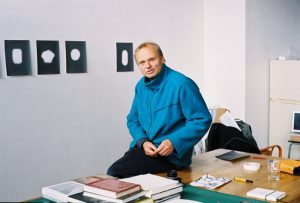
Jochen Lempert (*1958) studied biology. Between 1979 and 1989, he was a member of the experimental film group Schmelzdahin, which explored the combination of chemical processes and celluloid film.

View